

본문
[Disaster safety VR] Public Facility Descending Device Evacuation VR
safeplus
Disaster Safety VR Type 3
The disaster safety VR system is an education system that allows you to experience various disaster situations such as fire and earthquake in virtual reality. You can experience it in a safe environment without physical constraints, and repeat training is possible through this. It was developed with the aim of improving disaster response capabilities through realistic scenarios, strengthening crisis response capabilities, and contributing to the spread of safety culture.
Content

Public Facility Descending Device Evacuation VR
In the event of a fire in a public facility, this content is designed to check the evacuation map to identify the location of the fault zone and to use it to experience how to evacuate safely. It was developed to improve learners' understanding by adding a quiz format.
Content Overview
|
1. Content : Public Facility Descending Device Evacuation VR 2. Type : Disaster safety 3. Play time : 10 min 4. Operation: Streamlined(PC), Wireless(Mobile) 5. Devices : Vive pro2, Meta Quest with PC Link 6. Minimum space : 2m x 2m |
Devices
※ Since each device has different features, if you have any questions about it, please contact (+82) 02-2675-8803 / 8804 for further consultation.
-
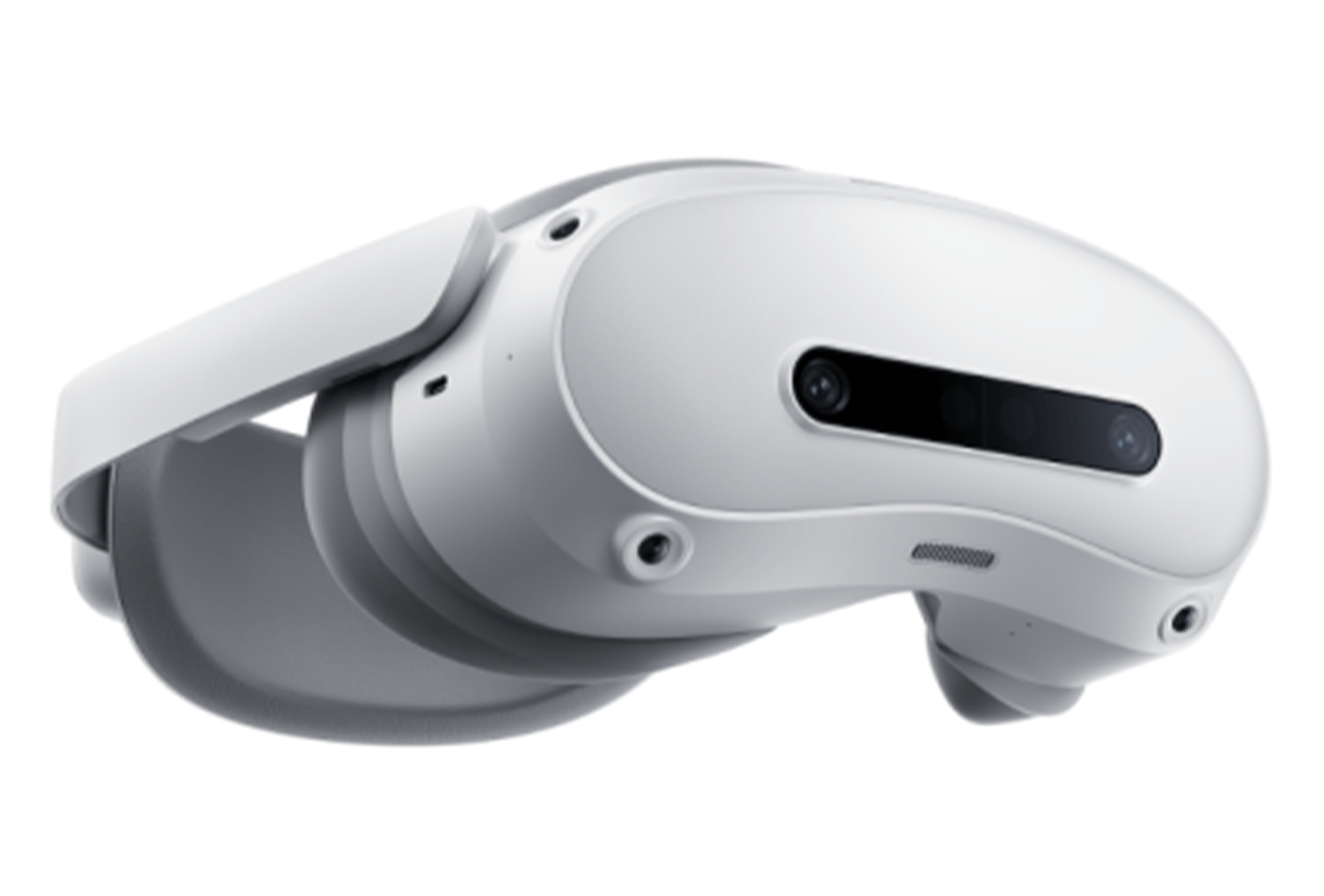
Meta Quest 2
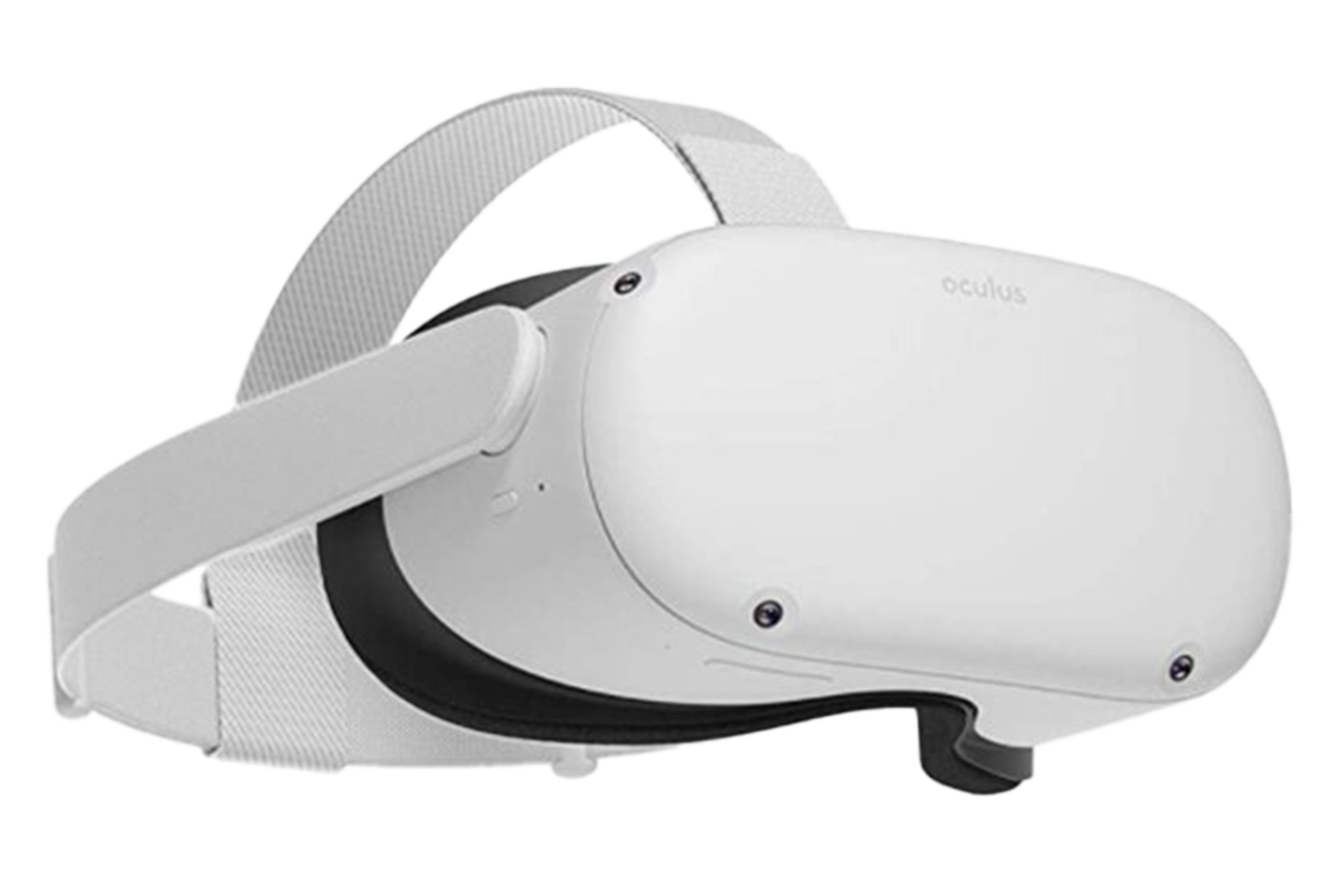
Wireless. Discontinued.
Only content compatible with existing purchased devices. -
Meta Quest 3
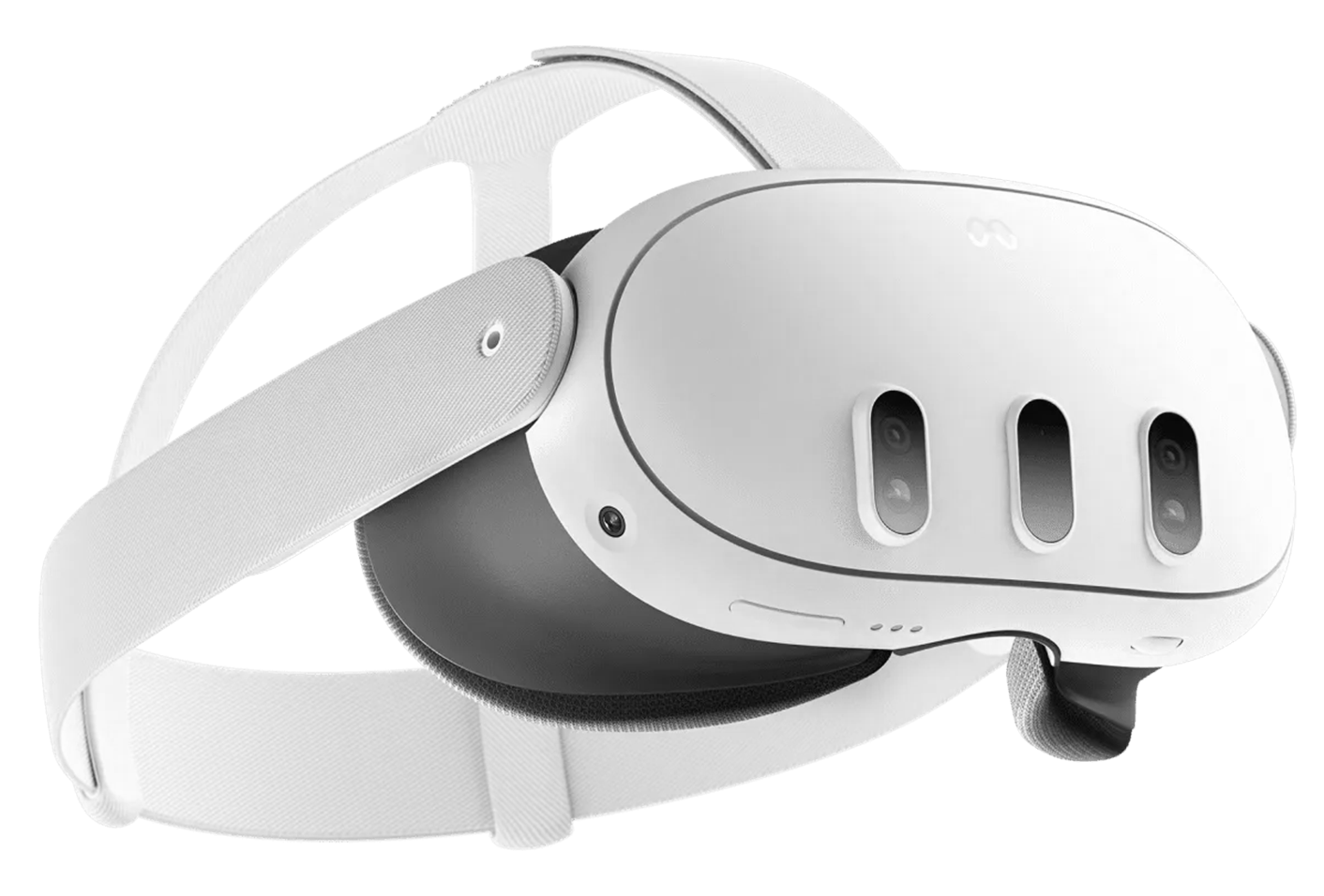
Wireless Only 512GB products available
If you own the device, only the content can be delivered separately. -
Vive PRO 2
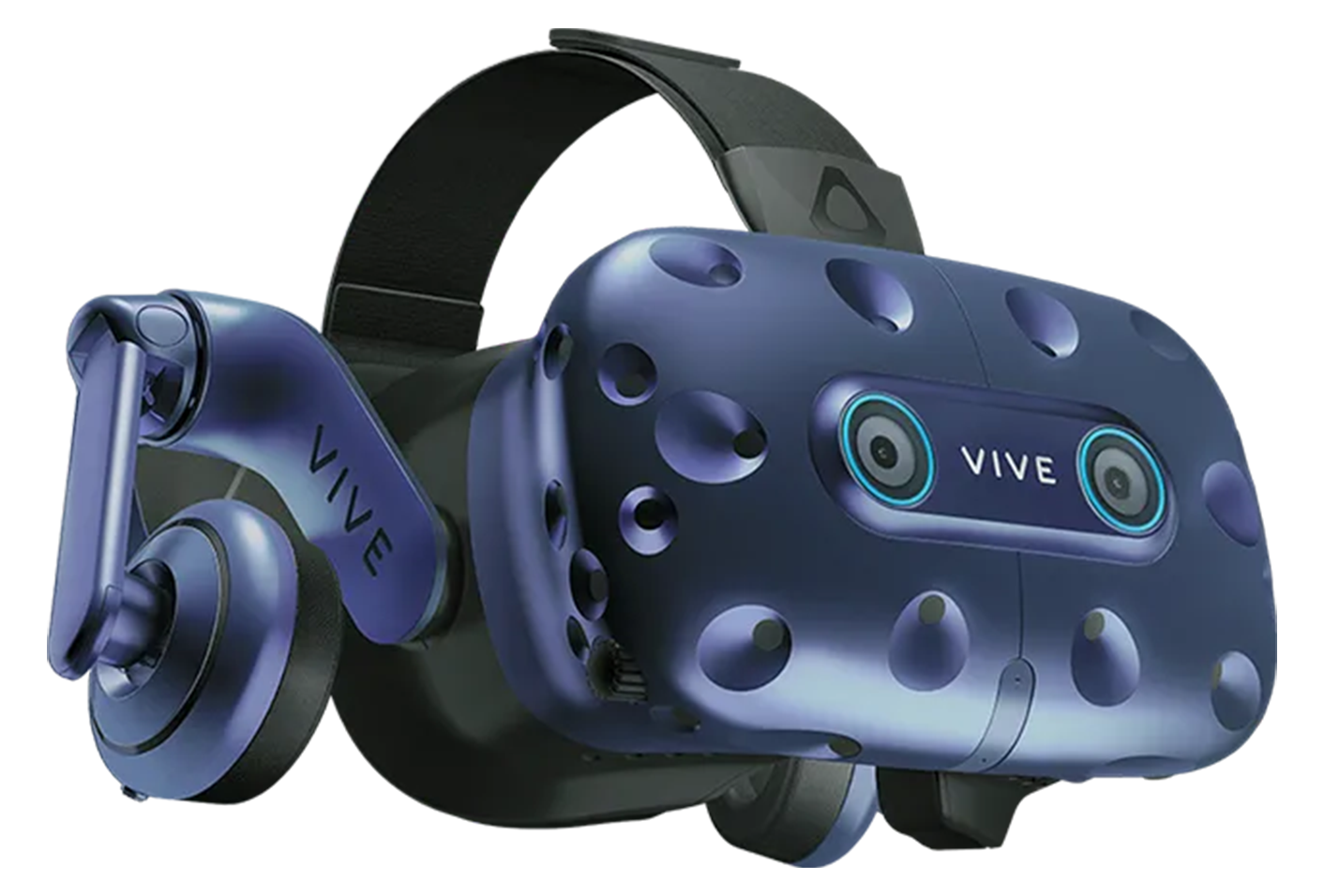
Streamlined High-performance VR
External simulator interworking is possible
Desktop Required
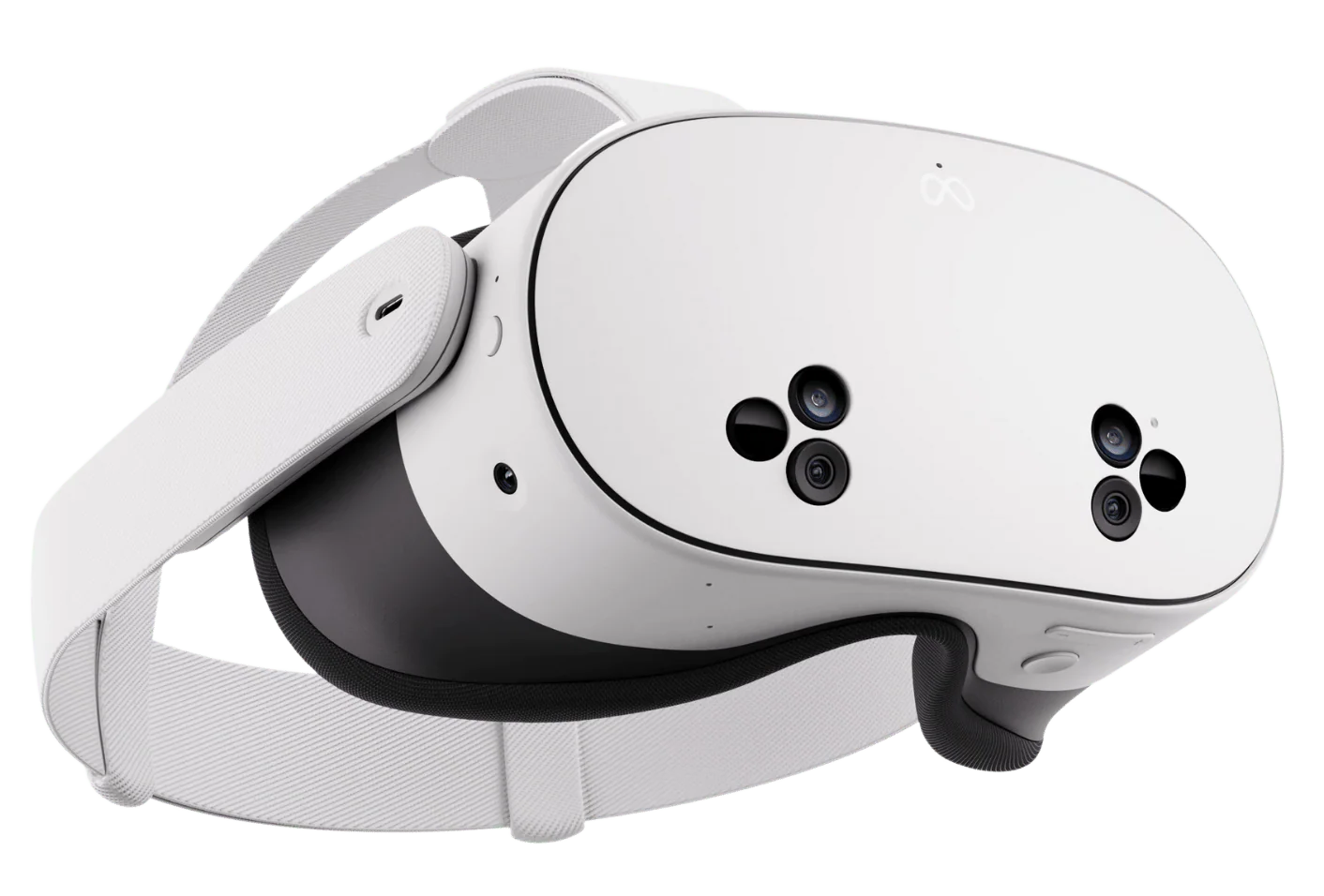
-
ㅁㄴㅇㅁㄴㅇㅇㅁㄴㅇㅁㄴㅇ ㄱ ㅅㅁㄴㅇㅁㄴㅇ3
Pre-Checklist
-
1
Choose between wired and wireless devices for training and operational purposes
Wired: Connecting PC and TV together allows managers to check in real time the trainee's progress (recommended for 1 to 3 units)
Wireless type: It is a type that is experienced with a single headset, and it is difficult to check the screen if you do not use a separate CMS program and mirroring function (recommended for large-scale deployments (up to 40 units)) -
2
Select the content you want
Peligood's industrial safety, disaster safety, disability experience, job experience, metaverse VR, and selection of about 20 contents -
3
Select the device type and simulator developed in conjunction with the desired content
Wire : Vibe Pro 2
Wireless : Meta Quest3, Meta Quest3S, Pico4, Pico4 UltraMeta : Frequent UI/UX updates and potential inconsistencies due to its consumer-centric nature, along with limited support for enterprise (B2B) services
PICO : Support Enterprise (B2B) Services, but Relatively High Amount Compared to Meta
-
Content Features
-
1
Realistic immersive safety training with CG-based graphics -
2
in a field-like environment Experience-driven learning delivery -
3
without time and place constraints efficient repetitive training -
4Integrated education that connects the cause of accident, accident experience, and safety measures
Content Composition
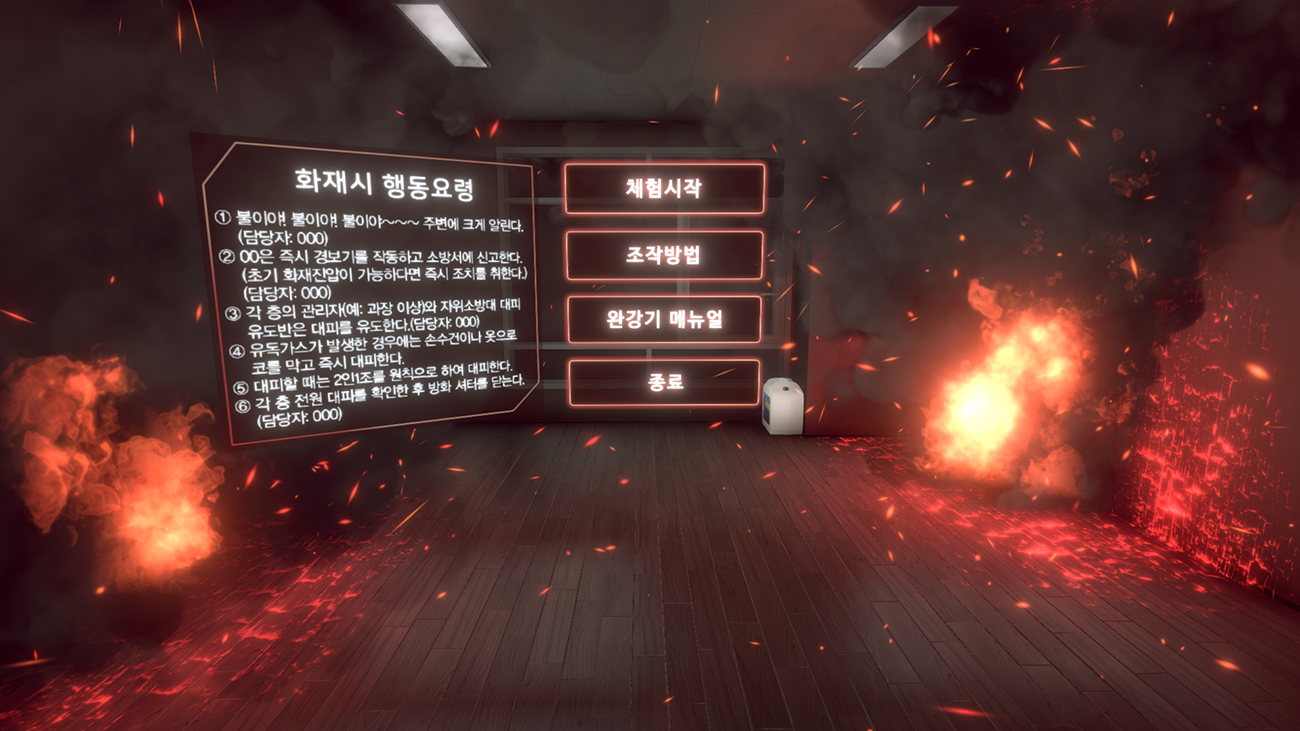
In the event of a fire in a public facility (such as a shopping mall), evacuation through emergency stairs is common, but there are many cases where it is difficult to evacuate emergency stairs depending on the situation. In this case, it is necessary to check the evacuation guidance along the emergency guide light and then evacuate using a stiffener. This content is developed to identify the location of the strangeness and learn how to use it, and then experience training to evacuate using the strangeness. Through this, we aim to learn to respond appropriately to exceptional situations other than the usual evacuation routes. You can check the safety common sense needed to avoid fire through a quiz, and it is designed to allow users to actively participate, helping to increase the interest and immersion of education.
-
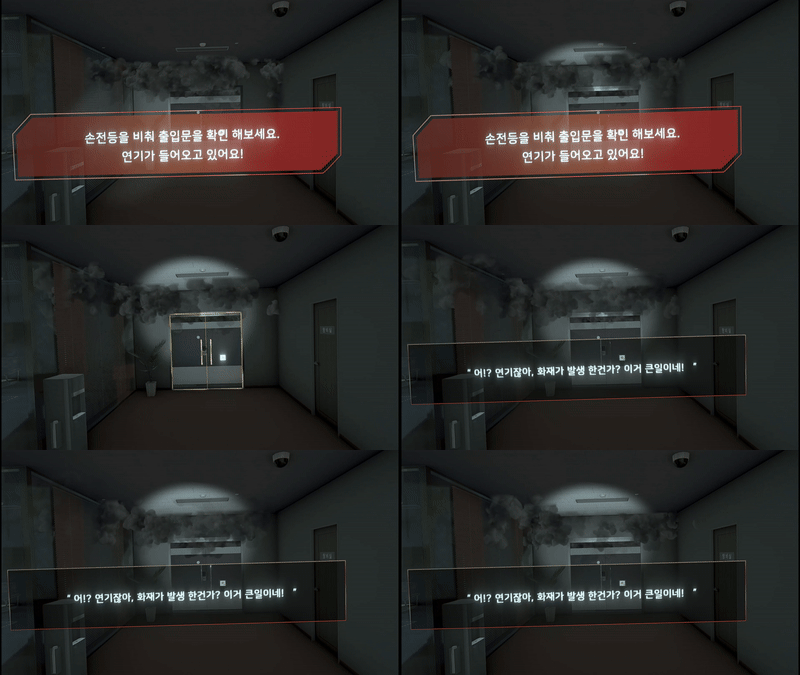 STEP 1fire recognition
The scenario begins with a security guard (first-person view) aware of fire conditions within a public facility. The fire has already spread beyond its initial stage, and the security guard recognizes that it is an emergency and then follows the emergency guide light to evacuate to the emergency stairs.
-
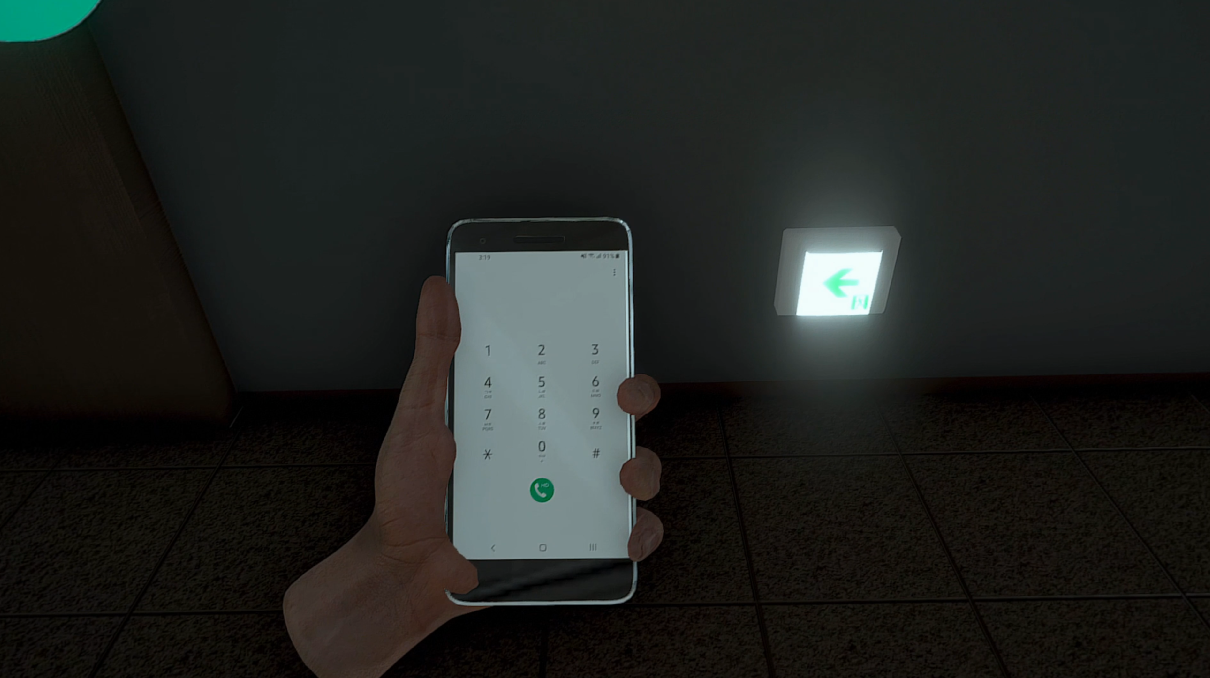 STEP 2Call 119
In the process of moving, a setting to report to 119 is configured first and is designed in the form of a quiz.
-
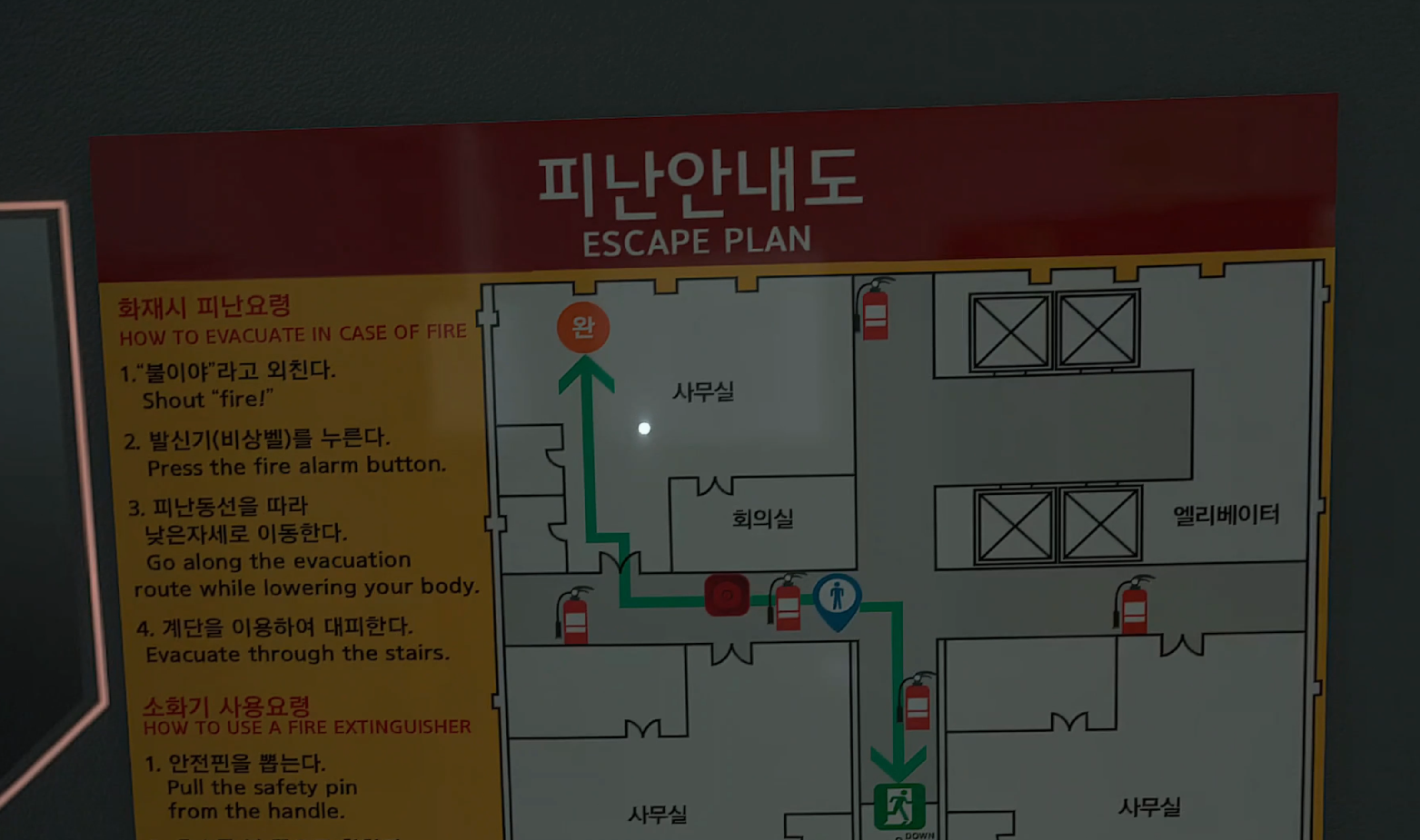 STEP 3 Check evacuation guidance
Check the emergency stairs and the location of the high temperature through the evacuation guide map. In this process, we use a transmitter (emergency bell) to guide people around us to quickly notify them of the fire situation.
-
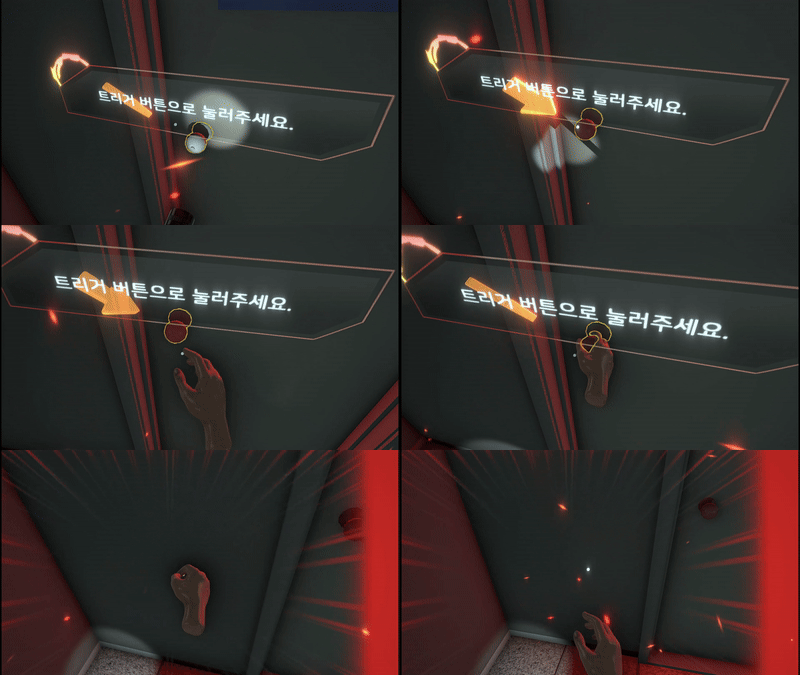 STEP 4 Emergency Staircase Evacuation
When evacuating to the emergency stairs, first check the temperature of the handle. If it is very hot, it is likely that the fire has spread outside, so evacuation to that route should be avoided. Through this step, we aim to develop safe evacuation judgment skills.
-
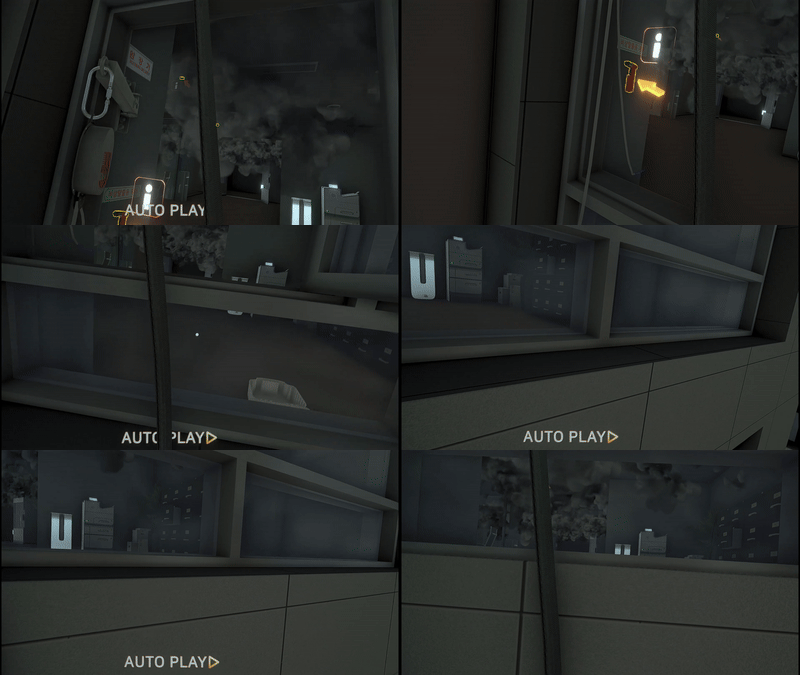 STEP 5a stubborn evacuation
After the emergency stairwell evacuation fails, locate the fault line and use the fault line to safely evacuate.Through this step, you can also learn how to use the stiffener in detail to respond calmly and effectively in the event of a fire in a public facility.
Development Types and Features
It is developed in three types, and you can choose it in consideration of the educational purpose and budget of the client.
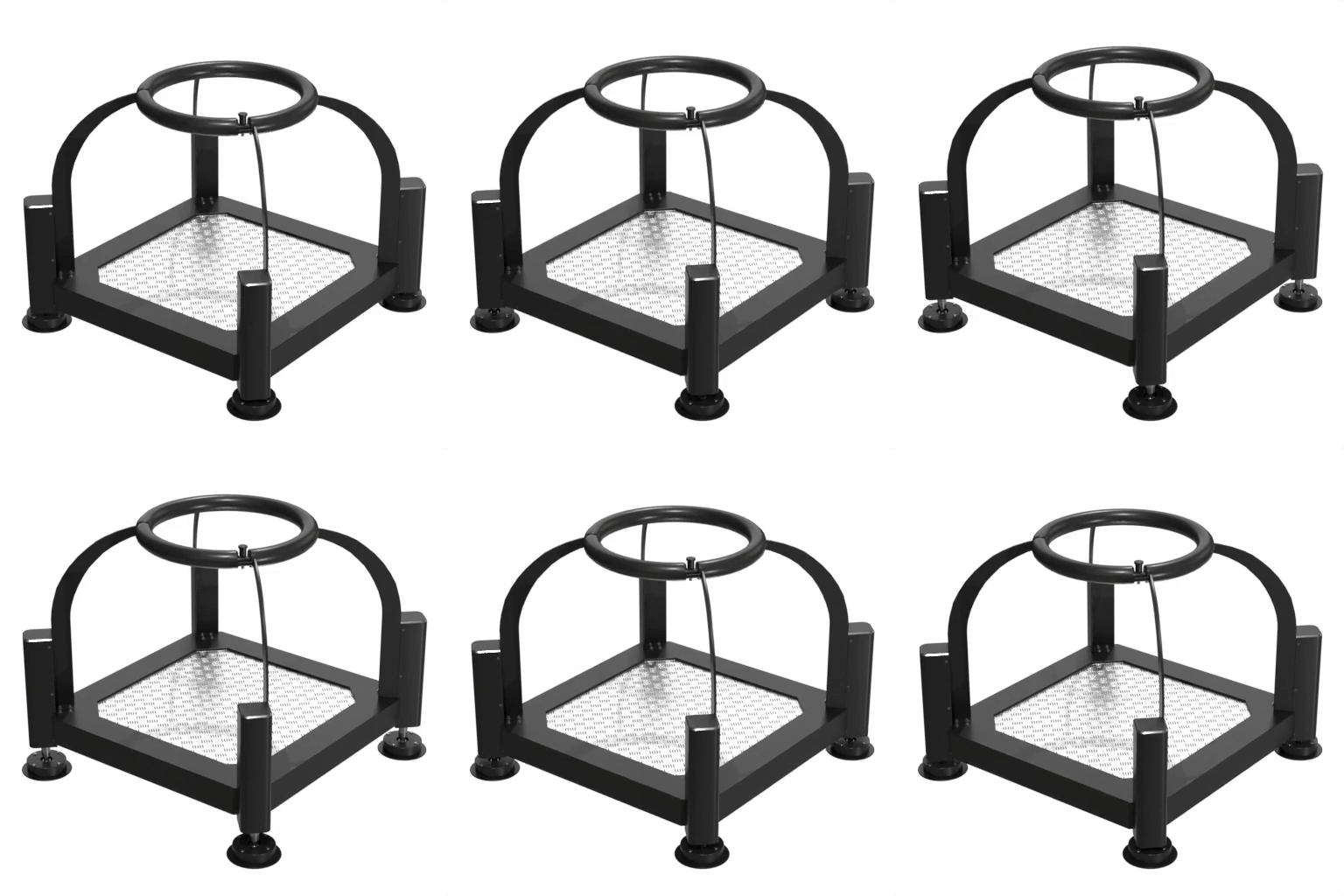
The simulator can only be linked to wired devices.
Development HMD(VR Device)
Streamlined : Vive Pro2
Wireless : Meta Quest3, Meta Quest 3S, Pico4, Pico4 Ultra
-
1
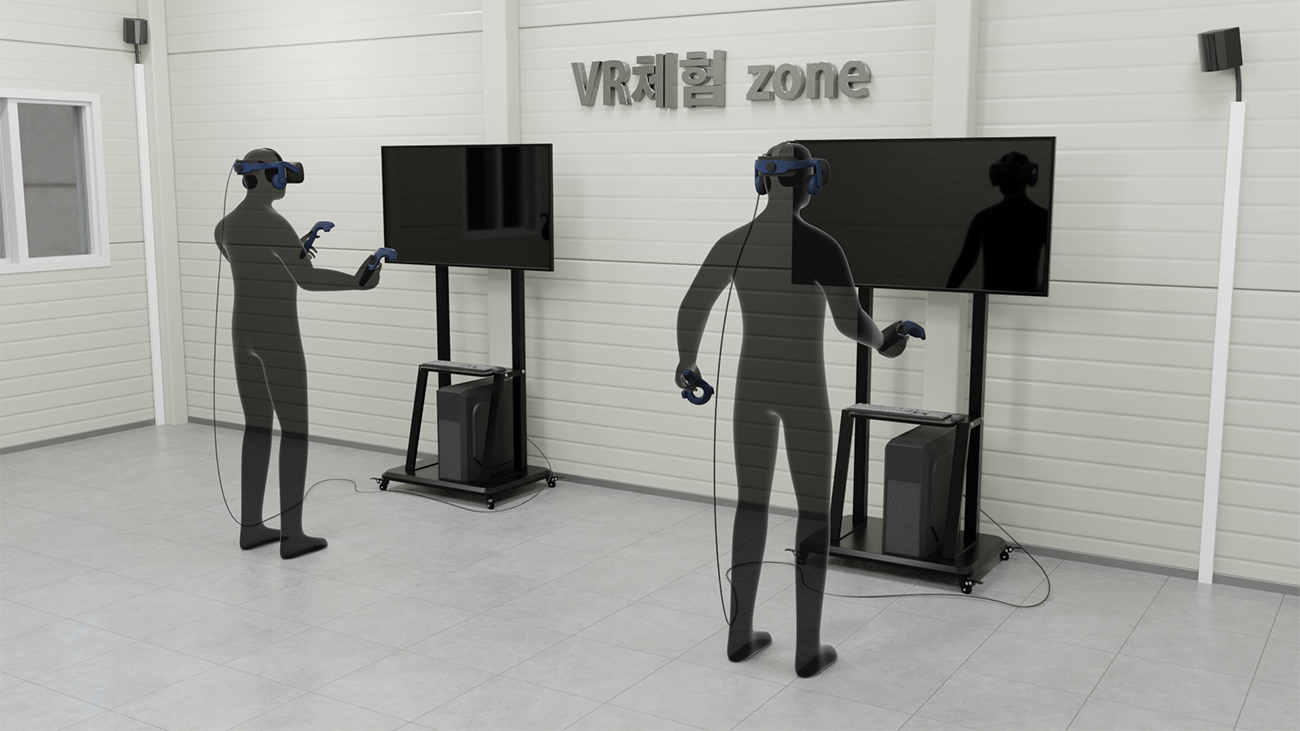
Streamlined (Simulator X)
- Connect with high-end PCs to provide high-resolution graphics-based immersion
- Maximize education and training with precise graphics and smooth VR implementation
- The user's screen can be connected to the TV to be checked in real time, making it easy to guide and check during training
-
2
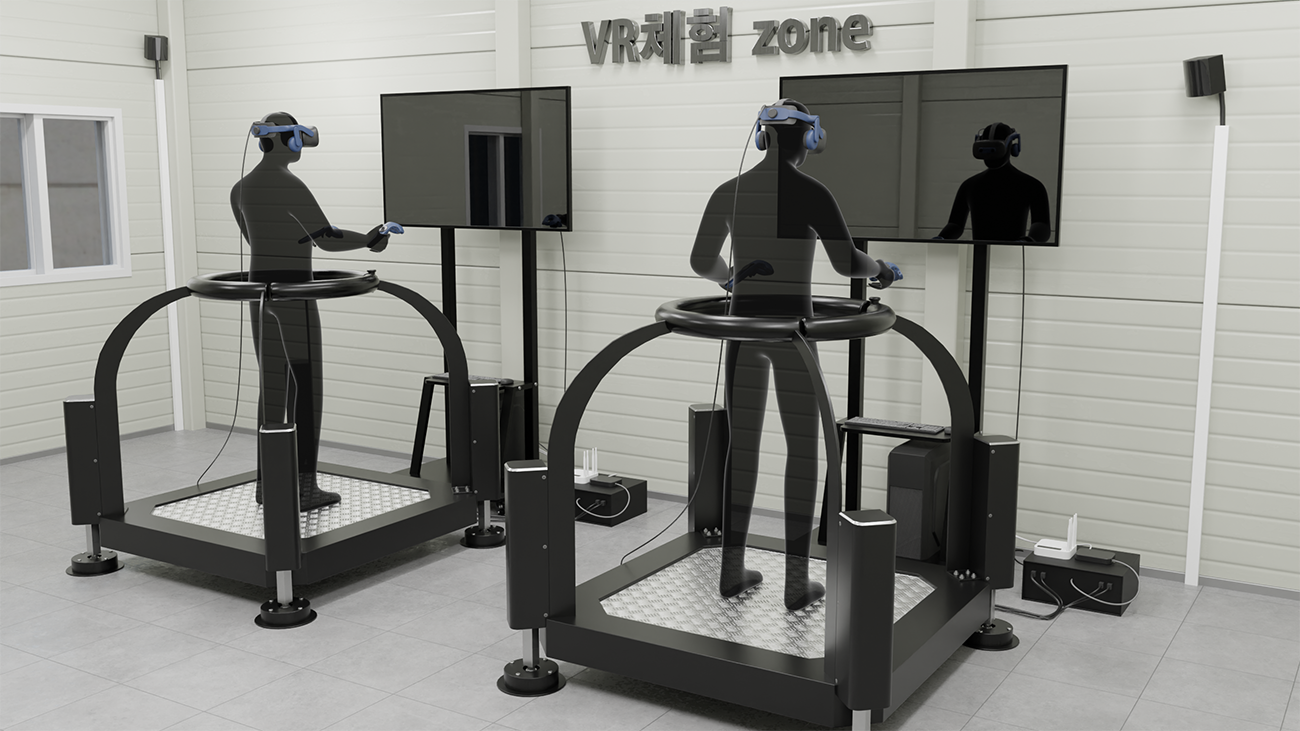
Streamlined (Simulator O)
- Connect with high-end PCs to provide high-resolution graphics-based immersion
- Maximize education and training with precise graphics and smooth VR implementation
- The user's screen can be connected to the TV to be checked in real time, making it easy to guide and check during training
- Strengthen realistic physical experiences through 4-axis motion simulators and software interworking
-
3
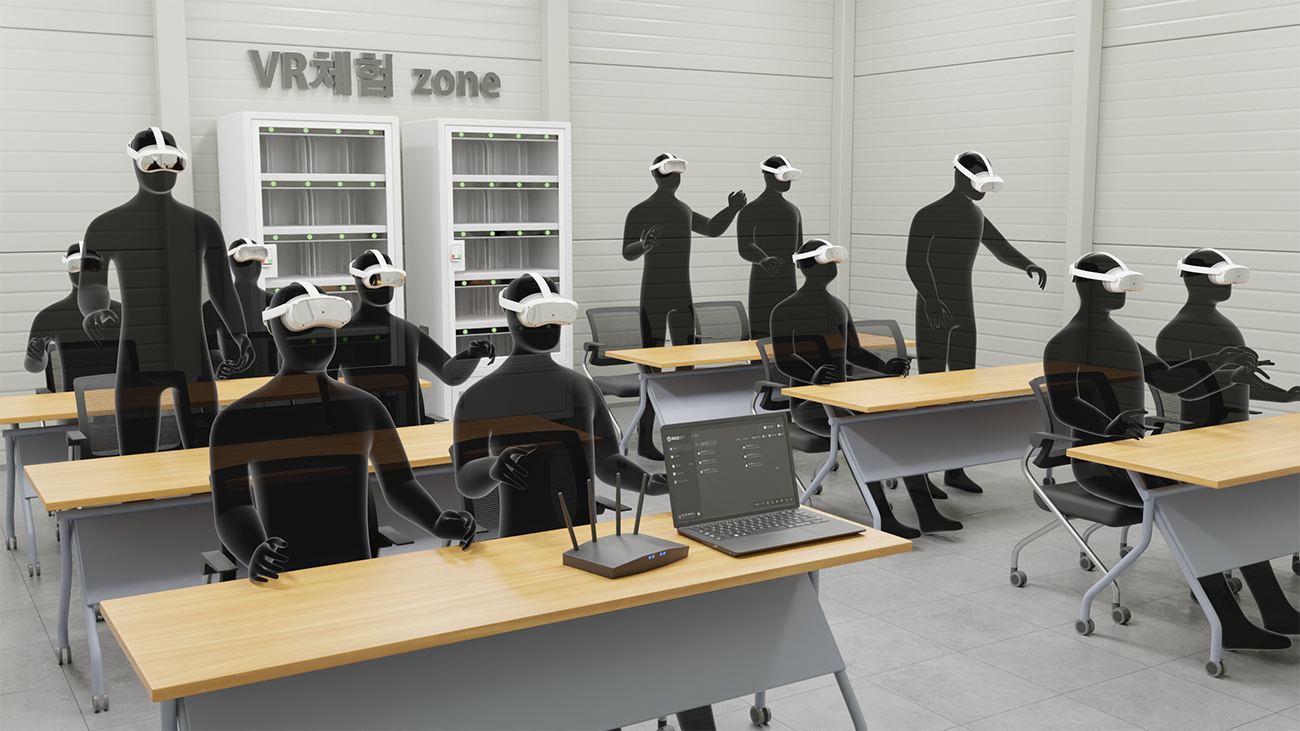
Wireless (Simulator X)
- Wireless HMD single configuration makes it easy to install and move and relatively low cost
- Content Management System (CMS) facilitates simultaneous training of multiple people (multiple controls, screen mirroring, etc.)
- Application of hand tracking technology to operate without a controller
Learn more
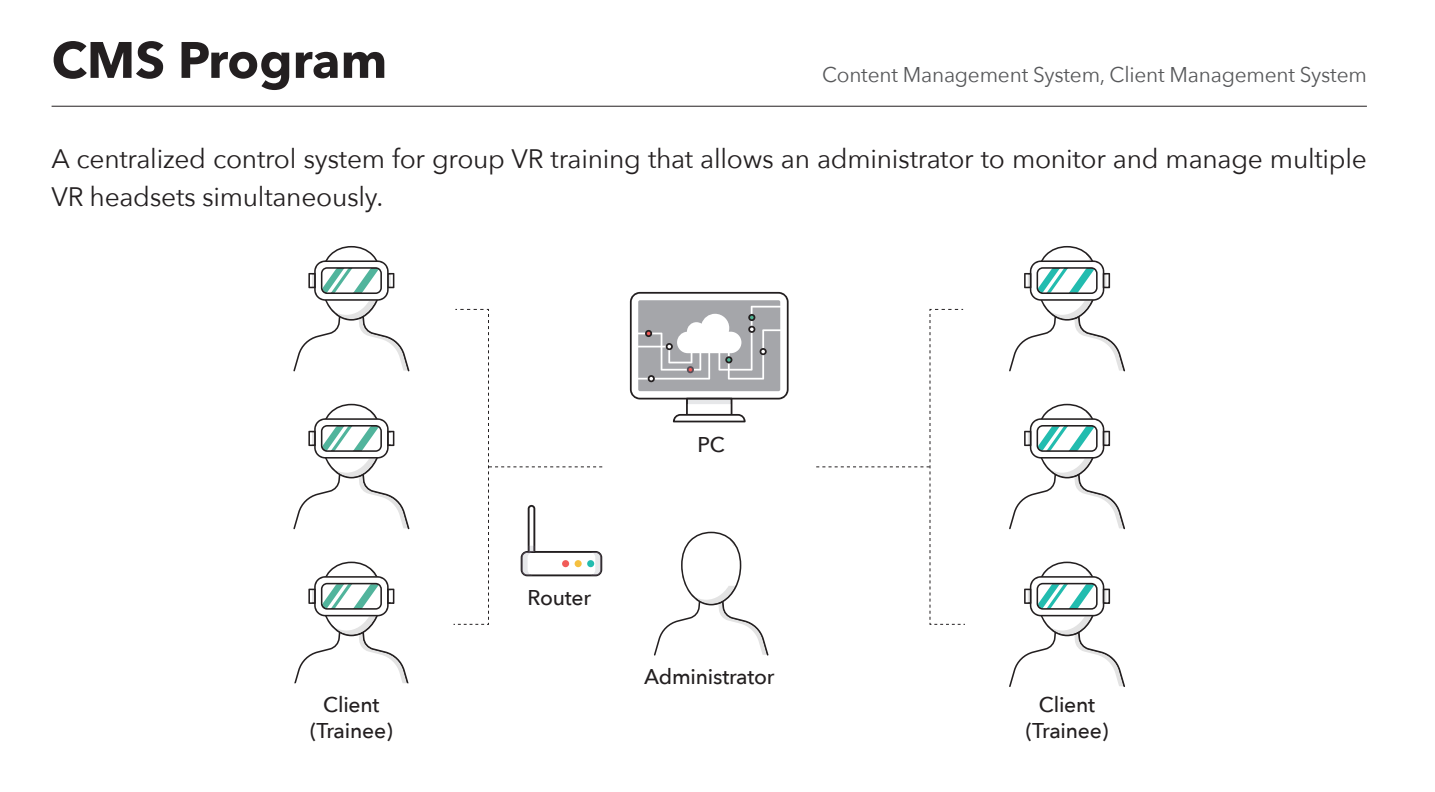
CMS Program
Client Management Program
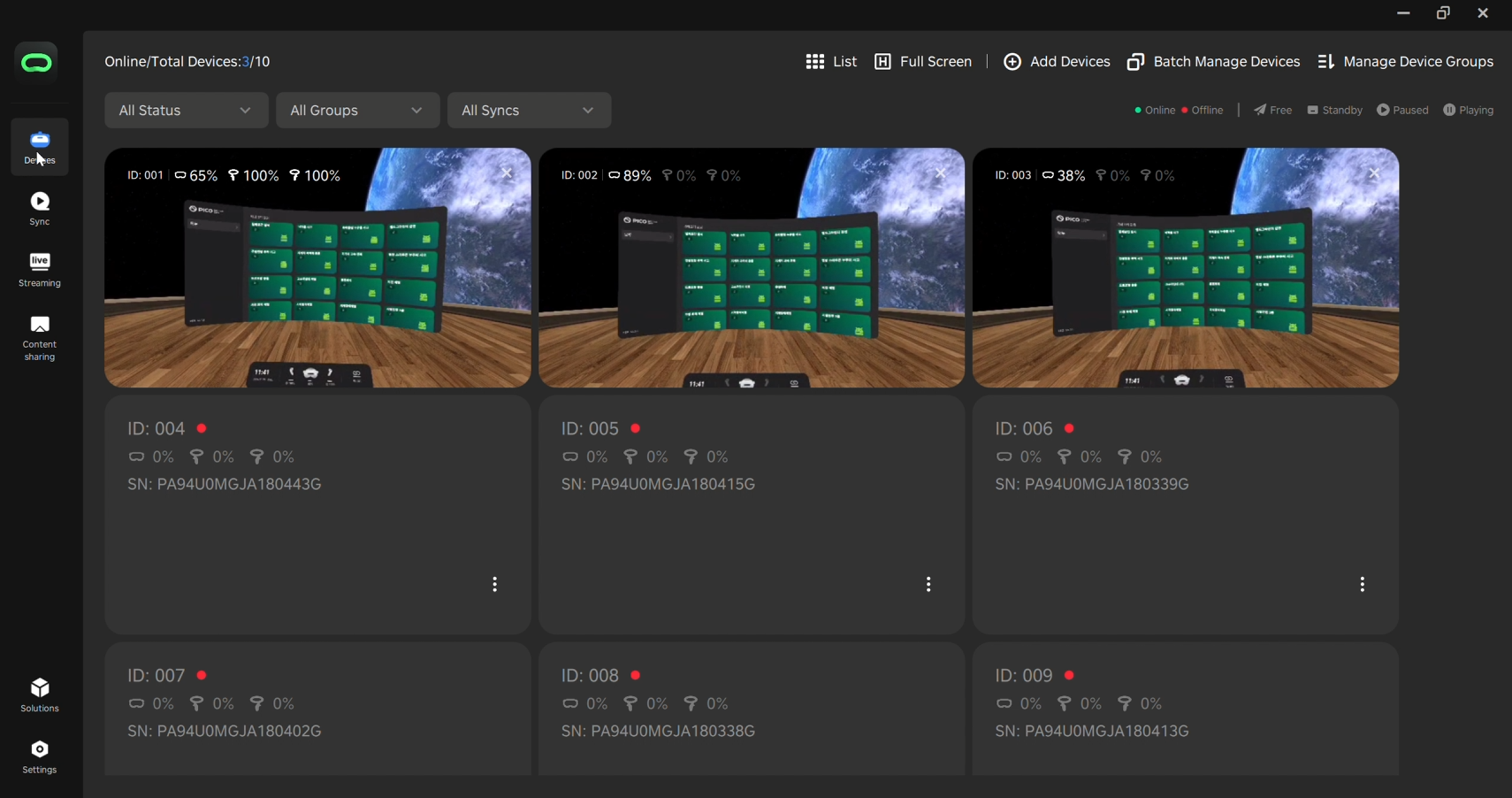
This CMS program is an integrated management solution fully compatible with PICO devices, enabling simultaneous control of multiple users.
It provides comprehensive operational features required for VR training, including content launch and termination, center alignment calibration, and volume control, ensuring efficient and systematic management in group training environments.
Built on a stable control framework, it enhances both operational convenience and user immersion in educational settings.
CMS Features
-
- Efficient operation of multiple devices 1
-
Centralized management of multiple VR devices
-
- Automatic device connection on the same network 2
-
Automatically connect through the same Wi-Fi network
-
- Stable system operation 3
-
Monitor device status in real time
- Stable system operation 3
-
- Consistent user experience 4
-
Operate multiple VR devices with the same setting
- Consistent user experience 4

Q&A
I already have a system built by a third party, can I buy only the software separately?
Even if it is no longer possible to support the existing system due to maintenance interruptions or production closures, if it is compatible with the HMD (VR device) owned by the customer, we can provide only our software separately. If the device model name is not confirmed or the information is uncertain because it has been built for a long time, we will provide technical review and consulting on whether or not it can be linked by just delivering a picture of the built VR device.
If you need consulting and consulting, please contact us through the Contact page on the website or at 02-2675-8803 business unit